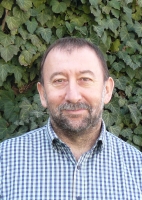
Dr Kis, Tamás
Assistant Professor

Professional CV

(University studies) After completing secondary school studies in Zs. Móricz Grammar School in Kisújszállás, I applied for admission to the Faculty of Arts, L. Kossuth University, Debrecen (majoring in: Hungarian and Russian). I was admitted without an entrance examination, thanks to a paper on young people’s slang submitted to the Students’ Scientific Association.

After four terms of study as a Hungarian–Russian major, I continued my studies in the major subjects Hungarian–Finno-Ugric. During my university years I also participated in courses in general and Indo-European comparative linguistics, Altaic linguistics, study of names, functional grammar, everything that was offered by the university in the various fields of linguistics.

(Scientific work in the undergraduate years) I was a member and regular contributor to the Students’ Scientific Association at the Institute of Hungarian Linguistics, in 1985 and 1987 I participated in the Association’s competition with two works (Hungarian military jargon, 121 pp: Study on names of our pubs and inns, 155 pp) With the latter paper I won special grand prize at the 1987 conference.

In addition to work in the Students’ Association I gradually joined in the work of the chairs of Finno-Ugric and Hungarian Linguistics. In my fourth and fifth years I worked as an undergraduate assistant at the Chair of Finno-Ugric Linguistics, in my fifth year I did educational work as a part-time lecturer at the Chair of Hungarian Linguistics. Prior to this assignment I participated in the preparatory work of the Csokonai Thesaurus, then in the checking and correction of the vocabulary list to Karjalainen Ostyak texts and made extracts from Vogul, Ostyak and Samoyedic mythological material of Soviet periodicals for the chapters of Mythologisches Wörterbuch written by Edit Vértes.

(University educational work) I graduated from L. Kossuth University in 1988. From August that year –as continuation of my previous work in my fifth year of study– I was appointed assistant lecturer for the Chair of Hungarian Linguistics of L. Kossuth University. I have been senior lecturer since 1993. For two years (from the1992–93 academic year) I held a part-time educational job at Miskolc University.

My task is teaching the structure and history of present-day Hungarian language, however, I regularly hold lectures in name studies too.

(Other university activities) Since 1989 I have been chairman of the Students’ Scientific Association at the Institute of Hungarian Linguistics, I was, in turn, secretary to the Chair and the Institute, since 1995 I have been deputy head of the Chair.

(Scientific research work) Within the field of Hungarian linguistics my particular field of research is primarily slang research and also study of names, Finno-Ugric linguistics and sociolinguistics.

Outstanding among my shorter publications (etymology of names, works with reference to name-study) is the editorial work for the publication of Frigyes Pesty’s material of place names in Bihar county, performed in cooperation with István Hoffmann.

My main field of research is the theoretical and practical investigation of Hungarian slang. Besides the books and papers enlisted in the bibliography I prepared for publication a volume by Vilmos Zolnay and Mihály Gedényi: A régi Budapest a fattyúnyelvben [The Old Budapest in the Argot], and further, I created and also host the first and so-far only Hungarian collection of slang on the Internet, where, among other things, one can find the documents processed as preliminary work for the Great Dictionary of Hungarian Slang.

Since 1993 I have been technical editor of the Annals of the Chair of Hungarian Linguistics, Magyar Nyelvjárások [Hungarian Dialects], as well as most of the publications of the Chair.

(Scientific degrees, membership to societies) The degree Doctor of Arts (MA) was conferred to me in 1991 (first-class honours) for my dissertation on Hungarian military slang, then in 1996 I was granted (with maximum score) the PhD degree. I have been member of the Hungarian Society for Linguistic Science.

Publications

Books:

  1. A magyar katonai szleng szótára (1980–1990) [Dictionary of Hungarian Military Slang (1980–1990). (A Debreceni Kossuth Lajos Tudományegyetem Magyar Nyelvtudományi Intézetének Kiadványai 60). Debrecen, 1991. (178 pages).
  2. Bakaduma (A mai magyar katonai szleng szótára) [Dictionary of Contemporary Hungarian Military Slang]. Zrínyi Kiadó, Budapest, 1992. (391 pages).
  3. Hungarolingua 2. Szótár [Hungarolingua. Part 2. Dictionary]. Edited by Tamás Kis with the assistance of Judit Molnár. English part by Nóra Séllei and Márta Tuba, German part by Jiří Pilarský, French part by Mária Marosvári. Debreceni Nyári Egyetem, 1993. (229 pages).
  4. Pesty Frigyes kéziratos helynévtárából, 1864. Bihar vármegye I2. [Frigyes Pesty’s dictionary of place-names. 1864 Bihar county. Part 1–2.]. Published by István Hoffmann and Tamás Kis. (A Debreceni Kossuth Lajos Tudományegyetem Magyar Nyelvtudományi Intézetének Kiadványai 65). Debrecen, 1996, 1998. (335 + 314 pages). (1: PDF | 2: PDF)
  5. A magyar szlengkutatás bibliográfiája [Bibliography of Hungarian Slang Research]. (A Debreceni Kossuth Lajos Tudományegyetem Magyar Nyelvtudományi Intézetének Kiadványai 68). Debrecen, 1996. (99 pages). (WinWord)
  6. Szempontok és adalékok a magyar szleng kutatásához. [Viewpoints and Notes on Hungarian Slang Research]. (A Debreceni Kossuth Lajos Tudományegyetem Magyar Nyelvtudományi Intézetének Kiadványai 71). Printed from the Volume “A szlengkutatás útjai és lehetőségei” Debrecen, 1997. (60 pages).

Reviewed studies:

  1. Újabb szempontok az osztják személynévkutatásokhoz [Some new viewpoints for the research of Ostyak personal names]. Folia Uralica Debreceniensia 1 (1989): 39–44
  2. Gulyáságyú és soppakanuuna Gulyáságyú és sopagesakanuuna [Words meaning ‘bean gun’ in some of the Europian languages]. Folia Uralica Debreceniensia 2 (1991): 87–95
  3. Morgó [Etymology of the name Morgó]. Magyar Nyelvőr 115 (1991): 263–267
  4. Gugyori és Kutyakaparó I. (Egy alföldi csárdanévtípusról) [On a type of inn name at the Great Plain]. Névtani Értesítő 15 (1993): 180–185
  5. A szleng szótárazhatóságának néhány kérdése. [Some aspects of the possibilities of making slang dictionaries]. Előadás A magyar nyelvészek VI. nemzetközi kongresszusán. (A lexikológia és lexikográfia elmélete és módszertana). Eger, 1994. augusztus 24.
  6. A magyar szlengszótárak [Hungarian slang dictionaries]. Magyar Nyelvjárások 32 (1995): 79–94
  7. Gugyori és Kutyakaparó II. (Egy alföldi csárdanévtípusról) [On a type of inn name at the Great Plain]. Névtani Értesítő 16 (1994 [1995]): 19–26
  8. Személynevek a szlengben [Personal names in slang]. Magyar Nyelvjárások 33 (1996): 93–104
  9. A csoportnevek [Group names]. In: Az V. Magyar Névtudományi Konferencia előadásai. (MNyTK. 209). 1997. 207–14
  10. Szempontok és adalékok a magyar szleng kutatásához [Viewpoints and Notes on Hungarian Slang Research]. In: A szlengkutatás útjai és lehetőségei. (Szlengkutatás 1). Ed. Tamás Kis. Kossuth Egyetemi Kiadó, Debrecen, 1997. 237–296
  11. Őstolvajnyelv. (A titkosnyelvek kialakulása és a simándiak koldusnyelve) [Primordial thieves’ language. The formation of secret languages and beggars’ language in Simánd]. Börtönügyi Szemle 17/3 (September 1998): 115–21

  12. О некоторых вопросах определения сленга в современном венгерском языкознании [Problems of the definition of slang in present-day Hungarian linguistics]. In: Nyelv – stílus – irodalom. (Köszöntő könyv Péter Mihály 70. születésnapjára). Ed. András Zoltán. Budapest, 1998. 307–14
  13. Titkok nyitja. (A magyar tolvajnyelv szótárai és szójegyzékei) [Key to secrets. Dictionaries and glossaries of Hungarian thieves’ language]. Börtönügyi Szemle 18/1 (March 1999í): 112–7
  14. A kocsma- és csárdanevek keletkezésének típusai [Formation Types if Inn Names]. Névtani Értesítő 21 (1999): 323–9
  15. Szubjektív vázlatpontok a szlengkutatás miértjéről [A subjective sketch on the reason for slang research]. Magyar Nyelvjárások 37 (1999): 293–8
  16. A magyar fattyúnyelv kutatói [Researchers of Hungarian Slang]. Magyar Nyelvjárások 38 (2000): 251–62
  17. Német tolvajnyelvi szójegyzék a 18. századból []. Folia Uralica Debreceniensia 8 (2001): 251–262 (PDF)

  18. A magyar katonai szleng [Hungarian Military Slang]. In: Szociolingvisztikai szöveggyűjtemény. Eds. Anna A. Jászó and Zoltán Bódi. Budapest, 2002. 105–13
  19. XVIII. századi zsiványnyelvi szójegyékeink []. Börtönügyi Szemle 21/2 (June 2002): 67–76
  20. Angaben zur Geschichte der ungarischen Gaunersprache []. In: Aspekte und Ergebnisse der Sondersprachenforschung II. (III. und IV. Internationales Symposion 17. bis 19. März 1999 in Rothenberge / 6. bis 8. April 2000 in Münster). Herausgegeben von Klaus Sievert unter Mitarbeit von Christian Efing. Harrassowitz Verlag, Wiesbaden, 2002. 165–178.
  21. A hangalaki szóalkotás []. In: Köszöntő kötet B. Gergely Piroska tiszteletére. Eds. Enikő Gréczi-Zsoldos–Mária Kovács. (A Miskolci Egyetem Magyar Nyelvtudományi Tanszékének Kiadványai 1.) Miskolc, 2002. 104–7.
  22. Bugás, bugázik: Magyar  Nyelvjárások 41 (2003):  327–334.
  23. A szleng fogalmáról: Magyar nyelvi szöveggyűjtemény. Szerk. Hangay Zoltán. Bp., 2003. 124–7.
  24. A szleng fogalmáról: A Hét (közéleti és művészeti kritikai lap) 2/51–52 (új folyam, 2004. december 16.): 14–15.
  25. A veláris i a magyarban: Magyar Nyelvjárások 43 (2005): 5–26.
  26. Is Slang a Linguistic Universal? In: Revue d’Études Françaises 11 (2006): 125–41. (Html)

Reviews:

  1. Tanulmányok a határainkon túli kétnyelvűségről [Studies on bilingualism over Hungarian borders]. Magyar Nyelvjárások 31 (1993): 143–149
  2. Ronald Wardhaugh: Szociolingvisztika. Modern Nyelvoktatás 1/1 (December 1995): 70–2
  3. Tóth Szergej (szerk.): Hatalom interdiszciplináris megközelítésben: Modern Nyelvoktatás 12/3–4 (2006. november–december): 104–10

Editorial work:

  1. ZOLNAY, VILMOS–GEDÉNYI, MIHÁLY, A régi Budapest a fattyúnyelvben. [Old Budapest in Slang]. Budapest, 1996. (136 pages). (WinWord formátumban ld. itt!)
  2. A szlengkutatás útjai és lehetőségei. [Ways and Possibilities of Slang Research]. (Szlengkutatás 1). Kossuth Egyetemi Kiadó, Debrecen, 1997. (301 pages).
  3. VLAGYIMIR JELISZTRATOV, Szleng és kultúra. [Vladimir Yelistratov, Slang and Culture]. (Szlengkutatás 2). Kossuth Egyetemi Kiadó, Debrecen, 1998. (183 pages).
  4. Mi a szleng? (Tanulmányok a szleng fogalmáról). [What Is Slang? Studies on the Concept of Slang]. Eds. Anna Fenyvesi, Tamás Kis, Judit Szilvia Várnai. (Szlengkutatás 3). Kossuth Egyetemi Kiadó, Debrecen, 1999. (285 pages).
  5. Magyar Nyelvjárások 38. (Köszöntő könyv Jakab László 70. születésnapjára) Eds. István Hoffmann, Tamás Kis, István Nyirkos. Debrecen, 2000. (501 pages). (WinWord)
  6. Magyar Nyelvjárások 39. Eds. István Hoffmann, Tamás Kis, István Nyirkos. Debrecen, 2001. (292 pages). (WinWord)
  7. A szlengkutatás 111 éve. []. Eds. Judit Szilvia Várnai és Tamás Kis. (Szlengkutatás 4. sz.) Kossuth Egyetemi Kiadó, Debrecen, 2002. (375 pages).
  8. Magyar Nyelvjárások 40. Eds. Hoffmann István, Kis Tamás, Nyirkos István. Debrecen, 2001. (292 pages). (WinWord ZIP)
  9. Magyar Nyelvjárások 41. (Köszöntő könyv Nyirkos István 70. születésnapjára). Eds. Hoffmann István, Kis Tamás. Debrecen, 2003. (pages).
  10. Magyar Nyelvjárások 42. Szerk. Hoffmann István, Kis Tamás, Nyirkos István. Debrecen, 2002. (214 lap). (WinWord ZIP | PDF)
  11. Magyar Nyelvjárások 43. Szerk. Hoffmann István, Kis Tamás, Nyirkos István. Debrecen, 2005. (224 lap). (WinWord ZIP | PDF)

[BACK]